
How to Store Fresh Organic Greens and Veggies at Home in Naperville, Illinois
Organic greens that wilt in two days, herbs that turn slimy before Wednesday, root vegetables that go soft before you even plan your next meal, these are quiet, costly frustrations that happen when fresh produce is stored the wrong way. In Naperville, Illinois, where many households make a deliberate effort to shop for quality organic food, poor storage habits can quietly undo all that effort before a single meal is cooked. The good news is that a handful of simple, science-backed techniques can dramatically extend the life of everything from fragile arugula to sturdy carrots, and you do not need any special equipment to get started.
This guide walks you through a practical, step-by-step system for storing the most common organic vegetables and leafy greens you will bring home from your local grocery store in Naperville. Whether you shop once a week or stock up for the whole family, these methods will help you get more from every purchase. And if you are still searching for the best source for fresh organic produce in Naperville, we cover that too.
Before You Start: What You Will Need
- Paper towels or clean cotton cloths (for moisture control)
- Airtight containers or zip-lock bags (quart and gallon sizes)
- A produce storage drawer or dedicated shelf in your refrigerator
- A few glass jars or tall cups with water (for herbs and green onions)
- A cool, dark pantry spot or countertop area (for ethylene-sensitive items)
- A vegetable brush (for root vegetables you plan to store unwashed)
- Optional: perforated produce bags or beeswax wraps
One quick note before diving in: organic produce, by its nature, is grown without synthetic preservatives or post-harvest chemical treatments. That is a genuine benefit, but it does mean the window for peak freshness can be slightly shorter than conventionally grown alternatives. Proper storage is not just helpful with organic food, it is essential.
Step 1: Sort Your Produce the Moment You Get Home
The single most impactful habit you can build is sorting everything as soon as you walk through the door, not when you are about to cook. Start by separating your haul into three groups: items that belong in the refrigerator, items that do best at room temperature, and items that need to be used within a day or two regardless of where they are stored.
- Refrigerator: leafy greens, broccoli, cauliflower, asparagus, green onions, fresh herbs (most), berries, cut vegetables
- Room temperature: tomatoes, avocados (until ripe), bananas, whole citrus, winter squash, garlic, onions
- Use within 24-48 hours: any bruised or partially cut produce, very ripe berries, wilted greens
Sorting at this stage also lets you spot anything that arrived already damaged. Removing a bruised item from a bunch of kale before refrigerating prevents ethylene gas and mold from spreading to the healthy leaves around it.
Step 2: Do Not Wash Greens Until You Are Ready to Use Them
This is one of the most common mistakes Naperville home cooks make: washing all their greens the moment they get home, thinking it saves time later. In reality, moisture left on leafy vegetables accelerates decay significantly. Bacteria and mold thrive in wet environments, and even a light rinse can reduce the shelf life of spinach, arugula, or mixed greens by several days if the leaves are not dried completely.
The exception to this rule is when you plan to eat the greens within the next 24 hours. In that case, washing and spinning them dry (using a salad spinner or patting with paper towels) and then storing them in a container lined with a dry paper towel works well. For everything else, keep greens unwashed and store them as described in the next step.
Step 3: Use the Paper Towel Method for Leafy Greens
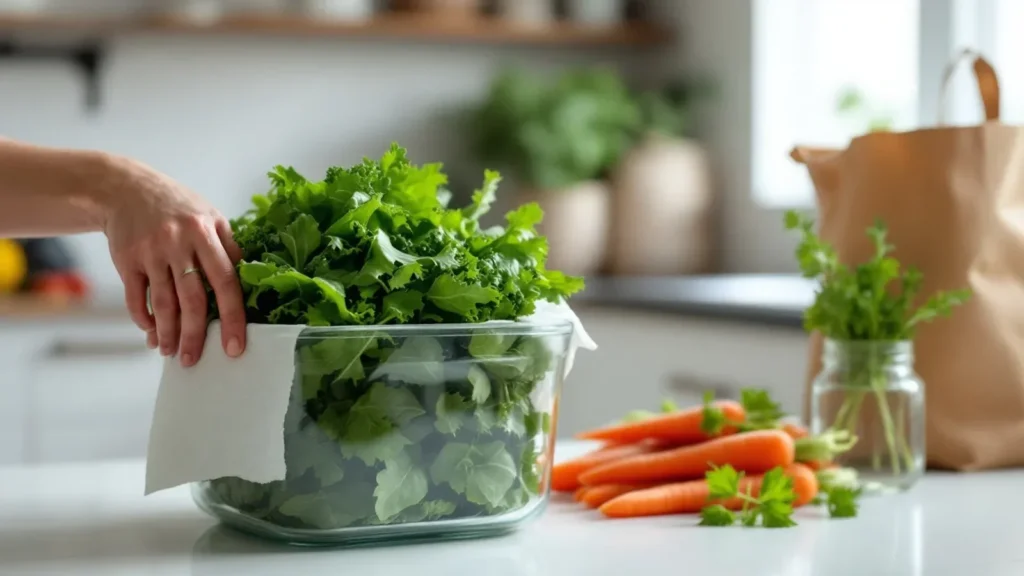
For leafy greens you want to last five to seven days, the paper towel method is one of the most reliable approaches available. Here is how it works:
- Open the bag or container your greens came in.
- Place one or two dry paper towels inside, surrounding the leaves loosely.
- Seal the bag or container and return it to the coldest part of your refrigerator crisper drawer.
- Replace the paper towels if they become saturated (usually every two to three days).
The paper towel absorbs excess moisture without drying the leaves out completely, maintaining the right humidity balance. This works especially well for spinach, mixed greens, arugula, and chopped kale. For whole heads of lettuce like romaine or butter lettuce, wrap the entire head loosely in a paper towel, place it in a bag with a little air left inside, and store it upright if possible.
If you want it handled correctly the first time, consider professional service areas in Naperville.
If you are curious about what makes organically grown greens worth protecting this carefully, the article on the benefits of local organic produce explains the nutritional and environmental case in detail.
Step 4: Store Fresh Herbs Like Cut Flowers
Fresh herbs are among the most perishable items in any organic grocery haul, and most people store them incorrectly. Soft herbs like parsley, cilantro, basil, and dill respond best to being treated like a bouquet of flowers rather than a bag of produce.
Trim about a half-inch from the stems, place the bunch upright in a glass jar with an inch or two of cool water, and loosely cover the leaves with a plastic bag or a clean produce bag. For basil specifically, keep it at room temperature on your counter rather than in the refrigerator, since cold temperatures cause basil leaves to blacken quickly.
For hardier herbs like rosemary, thyme, and sage, wrap them loosely in a slightly damp paper towel, place them in a zip-lock bag or airtight container, and store them in the crisper drawer. These can last one to two weeks when stored this way.
Step 5: Manage Ethylene-Producing Vegetables Carefully
Ethylene is a natural gas that certain fruits and vegetables produce as they ripen. Some produce is highly sensitive to ethylene and will over-ripen or spoil much faster when stored near ethylene-producing items. In Naperville homes where a full week’s worth of organic vegetables might be stored together, this interaction is a common but invisible source of premature spoilage.
High ethylene producers to keep away from sensitive items include: apples, pears, avocados, tomatoes, and bananas.
Ethylene-sensitive items that should be stored away from the above include: broccoli, cabbage, leafy greens, cucumbers, asparagus, and fresh herbs.
A practical fix: keep your ethylene-producing items in one crisper drawer and your sensitive greens and vegetables in the other, or in a separate container on a different shelf. This one adjustment alone can add several days to the life of your broccoli and leafy greens.
Step 6: Handle Root Vegetables and Cruciferous Vegetables Differently
Root vegetables like carrots, beets, turnips, and parsnips have different needs than leafy greens. Most of them store best in the refrigerator but need to be kept slightly moist without being wet. Here is a reliable approach for each:
- Carrots: Remove any green tops (which draw moisture from the root), store in a container of cold water in the refrigerator, and change the water every few days. Carrots stored this way can stay crisp for two to three weeks.
- Beets: Remove the greens (save them, they are edible and nutritious), store the roots in a sealed bag in the crisper. The greens should be treated like leafy greens and used within a few days.
- Broccoli and cauliflower: Store unwashed in a loosely sealed bag in the crisper. Avoid sealing too tightly, as these vegetables need a little airflow. Use within five to seven days for best flavor.
- Celery: Wrap tightly in aluminum foil rather than a plastic bag. The foil allows ethylene to escape while retaining moisture, keeping celery crisp for up to two weeks.
For potatoes, sweet potatoes, and winter squash, the refrigerator is actually the wrong place. Cold temperatures convert the starches in potatoes to sugars, changing their flavor and texture. Store these in a cool, dark pantry or cabinet away from direct sunlight and away from onions, which release gases that can cause potatoes to sprout faster.
Many Naperville homeowners rely on expert service areas in Naperville for exactly this.
Step 7: Use Airtight Containers for Cut or Prepped Vegetables
Once a vegetable is cut, its shelf life drops significantly regardless of whether it is organic or conventional. Cut surfaces are exposed to air and moisture, which accelerates oxidation and microbial growth. For any prepped vegetables you plan to use within the next few days, airtight glass or BPA-free plastic containers are your best option.
A few specific tips for common prepped items:
- Cut bell peppers: Store cut-side down on a paper towel inside an airtight container. Use within three to four days.
- Sliced cucumbers: Store in a container with a paper towel to absorb excess moisture. Use within two to three days.
- Chopped onions: Store in an airtight container (glass works better than plastic to contain the odor). Use within four to five days.
- Shredded cabbage: Store in an airtight container with a paper towel. Use within three to four days.
If you are meal prepping for a busy week, consider washing, drying, and cutting vegetables in batches right after your shopping trip, then storing them in labeled containers. This makes it easier to reach for healthy ingredients without extra prep time mid-week.
Step 8: Freeze What You Cannot Use in Time
Even with the best storage habits, life in Naperville gets busy, and sometimes produce gets ahead of you. Freezing is an excellent way to preserve organic vegetables before they turn, and most vegetables freeze well with minimal preparation.
The key step for most vegetables is blanching: briefly boiling them for one to three minutes, then immediately transferring to an ice bath to stop the cooking. Blanching deactivates the enzymes that cause vegetables to lose color, texture, and flavor in the freezer. After blanching and drying, spread the vegetables on a sheet pan, freeze until solid, then transfer to labeled freezer bags. This prevents clumping and lets you grab only what you need.
Vegetables that freeze particularly well include: broccoli, cauliflower, peas, corn, green beans, spinach, and kale. Vegetables that do not freeze well include: lettuce, cucumbers, celery (for raw use), and whole tomatoes (though they can be cooked from frozen).
If you prefer the convenience of having fresh organic food delivered rather than managing a large weekly haul, fresh grocery delivery in Naperville is an option worth exploring for smaller, more frequent orders.
Step 9: Audit Your Refrigerator Setup for Better Results
The way your refrigerator is organized matters as much as any individual storage technique. Many households in Naperville run their refrigerators at temperatures that are slightly too warm for optimal produce storage. The ideal refrigerator temperature for produce is between 35 and 38 degrees Fahrenheit. Check your settings and use an inexpensive refrigerator thermometer to confirm the actual temperature, since the dial setting and the real temperature often differ.
A few additional refrigerator habits that make a meaningful difference:
- Do not overfill the crisper drawers. Airflow matters, and tightly packed produce traps moisture and heat.
- Set your crisper drawers correctly. Most refrigerators have a high-humidity drawer (best for leafy greens and herbs) and a low-humidity drawer (best for fruits and vegetables that rot in moisture, like peppers and avocados).
- Clean your crisper drawers regularly. Residue from old produce can harbor mold spores that accelerate spoilage in fresh items.
- Store produce away from the back wall of the refrigerator, where temperatures can dip low enough to freeze delicate greens.
When to Call It: Signs That Produce Has Turned
Ready for the next step? Learn how service areas services in Naperville can help and reach out to the team.
Even with careful storage, knowing when to compost rather than eat is an important part of a sustainable kitchen routine. Eating produce that has genuinely spoiled is not worth the risk, and composting is a far better outcome than letting something sit until it is a health concern.
Signs that produce should be composted rather than eaten include: strong or sour odors, visible mold (even a small amount on soft vegetables warrants discarding the whole item), sliminess that does not wash off, or significant discoloration that goes beyond surface browning. For firm vegetables like carrots or cabbage, small soft spots can sometimes be trimmed away generously if the rest of the vegetable is firm and smells fresh.
When to Call a Professional in Naperville (For Your Refrigerator)
Storage technique only works as well as your equipment allows. If your refrigerator is not maintaining consistent temperatures, if the crisper drawers are cracked or do not seal properly, or if you notice frost forming in unexpected places, those are signs your appliance may need professional attention. An appliance repair technician can assess whether the temperature fluctuations are a mechanical issue. In the meantime, a refrigerator thermometer will help you monitor conditions and adjust where you store the most perishable items.
Frequently Asked Questions
How long do organic greens typically last compared to conventional greens?
Organic greens tend to have a similar shelf life to conventionally grown greens when stored properly, though they may be slightly more perishable because they are grown without synthetic post-harvest treatments. Using the paper towel method and keeping them in a high-humidity crisper drawer gives you the best chance at five to seven days of freshness.
Should I store all my produce in the refrigerator?
Not all produce belongs in the refrigerator. Tomatoes, avocados, bananas, whole citrus, garlic, onions, potatoes, sweet potatoes, and most winter squash are better stored at room temperature or in a cool, dark pantry. Refrigerating these items can negatively affect their flavor, texture, or ripening process.
Is it safe to eat organic produce that has a small amount of surface mold?
For soft produce like berries, leafy greens, or cucumbers, even a small patch of mold is a sign to discard the item, as mold spreads quickly through soft tissue. For very firm vegetables like carrots or hard squash, a small surface spot can sometimes be cut away with a generous margin, but when in doubt, composting is the safer choice.
What is the best way to store organic herbs from the farmers market?
Soft herbs like parsley, cilantro, and dill do best stored upright in a jar of water in the refrigerator, loosely covered with a bag. Basil is the exception and prefers room temperature on the counter. Hard herbs like thyme, rosemary, and sage last longest wrapped in a slightly damp paper towel inside a sealed bag in the crisper drawer.
How do I know if the produce I am buying is genuinely organic?
Certified organic produce in the United States carries a USDA Organic seal and typically has a PLU code beginning with the number 9. For more detail on what to look for, the guide on how to identify genuine organic produce in Naperville covers the key indicators to check at the store.
Make Every Organic Purchase Count
Bringing home quality organic food from a Naperville grocery store is only half the equation. The other half is making sure that food reaches your table at its best, rather than the compost bin before its time. The steps in this guide, from sorting immediately after shopping to managing ethylene exposure and optimizing your refrigerator setup, work together as a system rather than as isolated tips.
Naperville households that follow these habits consistently find they waste less, spend more intentionally, and actually enjoy the flavor difference that fresh organic produce offers. If you want to stretch your grocery budget further, the resource on shopping for organic food on a budget in Naperville pairs well with these storage techniques.
And if you are still looking for the most reliable source of fresh organic vegetables and greens in the area, our guide to the best organic food in Naperville can point you in the right direction. Naperville Fresh Market carries a wide selection of organic produce, and shopping with a storage plan already in mind means you can buy with confidence knowing nothing will go to waste.