Common Halal Meat Issues In Naperville, Illinois And Solutions
Even in a food-savvy city like Naperville, where good markets and conscientious shoppers are the norm, buying and preparing halal meat can raise questions. Over the years, neighbors have asked me about everything from deciphering certification labels to preventing cross-contact in crowded kitchens. I’ve had conversations with restaurant managers fine-tuning staff training, and with home cooks trying to streamline weeknight dinners without compromising values. Early on, I learned that reliable halal meat isn’t just a product; it’s a process that extends from the farm all the way to the dinner table. When any link in that chain is neglected—labeling, storage, prep, or communication—confidence falters. The good news is that most challenges are solvable with practical systems and a few new habits.
This guide gathers what I’ve seen work in Naperville homes and businesses. It doesn’t assume unlimited time or specialized equipment; instead, it focuses on clarity, repeatable routines, and respectful conversations with vendors and guests. Whether you’re cooking for family, hosting a neighborhood potluck, or running a small restaurant, the same principles—transparency, separation, and simplicity—help ensure your meals reflect both the letter and spirit of halal.
Issue 1: Confusing Or Inconsistent Certification Labels
One of the first hurdles for shoppers is label literacy. Certification logos vary, and not every package explains what standards the certifier enforces. In Naperville, where markets serve a diverse customer base, staff are usually prepared to answer questions, but busy times can make it hard to get a thorough explanation. Without clarity, shoppers may second-guess a purchase or avoid a new product altogether.
Solution: Pair certification with conversation. Ask the butcher or manager which certifying bodies they work with and what those organizations require. Keep your own notes on your phone: certifier name, what you learned about stunning policies, and any handling details the store shared. Over time, you’ll build a personal reference that speeds up shopping and strengthens trust. If a new product appears with an unfamiliar logo, you’ll know exactly what to ask—and how to decide confidently.
Issue 2: Cross-Contact At Retail Counters
Cross-contact can happen when halal and non-halal items share surfaces, utensils, or display areas. In mixed retail environments, even well-meaning staff can make mistakes during rush hours. Customers notice when tongs move between cases or when a cutting board looks like it handled different products without a clear cleaning step.
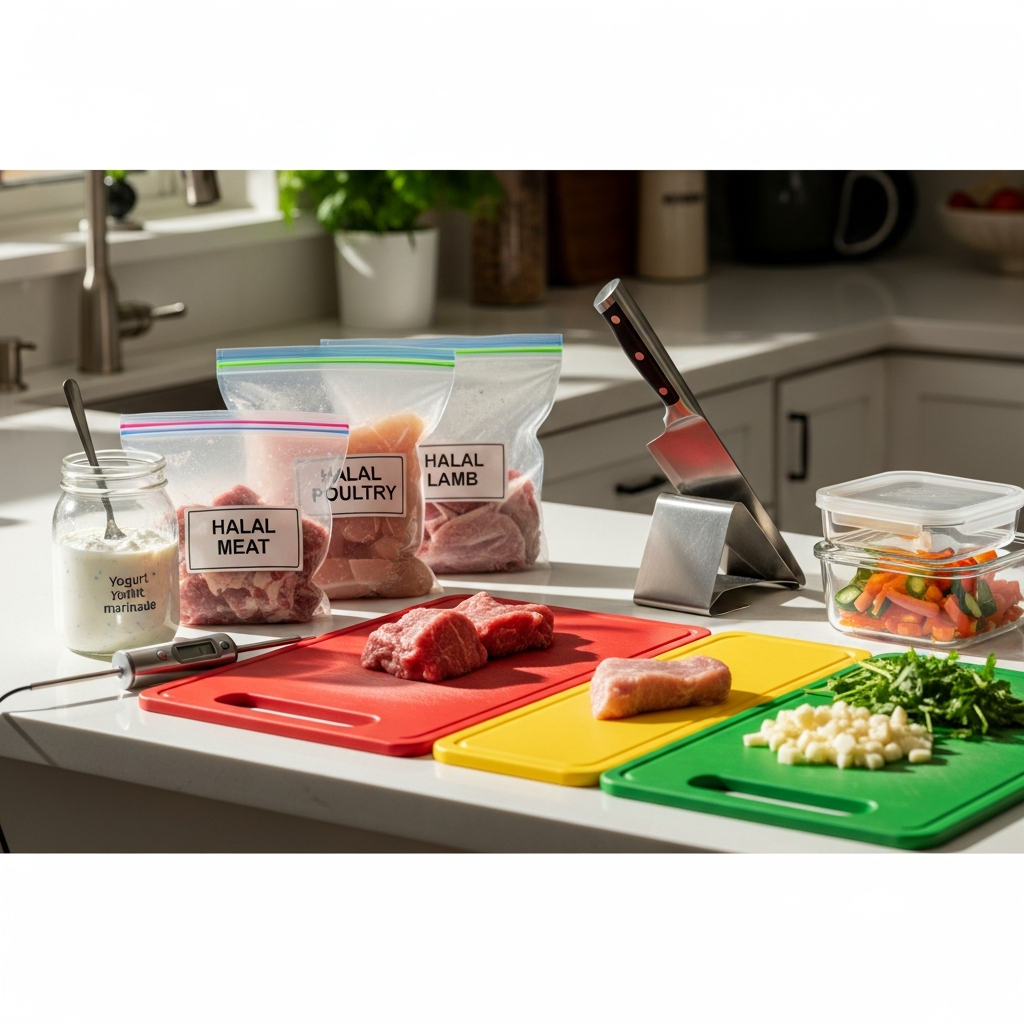
Solution: Look for visible systems. In Naperville’s better-run markets, halal stations have dedicated tools, color-coded cutting boards, and clear signage. Staff can explain their cleaning protocol and show where utensils are stored. As a shopper, it’s appropriate to request that your order be handled with fresh gloves and tools from the halal station. Your respectful questions reinforce good habits and encourage consistent training.
Issue 3: Restaurant Handling In Shared Kitchens
Restaurants that serve halal alongside other menu items face logistical challenges. Limited space makes it tempting to consolidate storage or reuse pans. Guests may assume that “halal available” means fully separate prep, when in reality the kitchen has implemented feasible steps—careful storage, sanitized equipment, and staff training—to respect halal orders within constraints.
Solution: Encourage transparency. Call ahead during non-peak hours and ask how the kitchen handles halal orders. A thoughtful response might include separate pans or griddles where possible, clearly labeled storage, and training to avoid cross-contact. When diners understand the process, expectations align, and trust grows. Operators should document procedures, refresh training regularly, and designate a point person to answer guest questions calmly and consistently.
Issue 4: Hidden Non-Halal Ingredients In Marinades And Add-Ons
Marinades, sauces, and deli-style items can hide ingredients that conflict with halal guidelines—alcohol-based flavorings, certain vinegars, or casings that don’t meet requirements. Shoppers might assume all items in a halal case are safe, but suppliers may differ in standards for value-added products.
Solution: Verify components. Ask whether pre-marinated items use flavorings aligned with halal standards and what type of casing is used for sausages. If a store offers house-made marinades, request an ingredient list. At home, stick to straightforward, reliable marinades—yogurt with garlic and spices, lemon and olive oil with herbs—so you always know what’s in the bowl. For potlucks, label dishes with a simple ingredients note to help guests feel confident.
Issue 5: Storage And Thawing Missteps At Home
Even the best-sourced meat can disappoint if storage and thawing aren’t handled carefully. Rushed weeknights make it tempting to leave meat on the counter or to forget to label freezer bags, leading to guesswork later. Texture, juiciness, and food safety all suffer when these steps go sideways.
Solution: Build a two-minute system. When you get home, portion meat into meal-size packs, label with cut and date, and lay flat for fast freezing and thawing. Thaw in the fridge on a tray to catch drips, or use a cold-water bath with sealed packaging and frequent water changes. Keep raw items on the bottom shelf to avoid drips onto ready-to-eat foods. These small habits prevent headaches and preserve quality.
Issue 6: Communication Gaps At Events
Potlucks, school functions, and workplace lunches can inadvertently exclude guests if dishes aren’t labeled clearly or if halal items share utensils with other foods. People want to do the right thing, but without clear structure, good intentions can get lost in the bustle of setup and service.
Solution: Plan the table. Assign separate serving utensils to halal items and place them at a slight remove from other dishes. Use simple labels and identify a point person to answer questions. Volunteers should receive a quick briefing on cross-contact and be ready to refresh utensils if they wander between trays. Clear communication keeps the moment focused on community rather than confusion.
Issue 7: Conflicting Opinions On Stunning And Machine Slaughter
Discussions around stunning and mechanical processes can become heated because certification standards and personal beliefs differ. Shoppers sometimes feel pressured to choose a side without enough information, which can erode community goodwill.
Solution: Prioritize respectful inquiry. Ask retailers which standards they follow and why. Recognize that reputable certifiers approach these topics thoughtfully, and that informed consumers can make different choices in good faith. In Naperville, productive conversations focus on transparency and mutual respect rather than point-scoring.
Issue 8: Limited Time For Weeknight Cooking
Busy schedules are a universal challenge. Without a plan, it’s easy to default to takeout or to rush cooking, risking overdone or under-seasoned results. Families want to uphold halal values and still get dinner on the table quickly.
Solution: Create weeknight anchors. Keep a short list of cuts that cook fast—thin steaks, ground beef for kofta, bone-in chicken thighs for the oven or air fryer. Mix two reliable marinades on Sunday, portion and freeze, and move a pack to the fridge each morning. Pair with quick sides you can prep in parallel. These rhythms protect both quality and sanity.
Issue 9: Misinformation On Social Media
Social platforms can spread both helpful tips and half-truths about halal, leading to confusion about what is permissible or how to handle meat safely. Viral advice sometimes prioritizes novelty over reliability.
Solution: Cross-check with trusted sources. In practice, that often means your local butcher and your own community’s recognized guidance. When you hear a new claim—whether about a miracle tenderizing trick or an alarming certification rumor—ask a vendor you trust to weigh in. Grounding decisions in local expertise reins in the noise.
Issue 10: Supplier Shortages During Peak Seasons
Ramadan, Eid, and summer grilling season can strain supply chains. Shoppers may encounter limited selection or need to adapt recipes when a favorite cut sells out.
Solution: Plan and pivot. Shop a bit earlier before holidays, and ask staff about delivery schedules. Have a backup plan—if lamb shoulder is scarce, consider beef chuck for a similar slow-braise experience. Build menus around techniques rather than single cuts so you can swap intelligently without sacrificing flavor.
Strengthening Trust At The Counter
Trust is cumulative. Naperville shoppers return to counters where questions are welcomed, where staff handle meat with care, and where labeling is both accurate and readable. Managers who embrace transparency gain loyal customers who spread the word. For their part, customers who ask respectfully and share constructive feedback help raise standards. Over time, this partnership produces a smoother experience for everyone—and consistently better meals at home.
Restaurants benefit from the same dynamic. When teams document procedures, train regularly, and communicate clearly with guests, they convert first-time diners into regulars. Staff feel empowered, guests feel understood, and the kitchen runs with fewer last-minute scrambles.
Practical Home Systems That Work
At home, the most reliable systems are simple. Keep a dedicated cutting board and knife for raw meat, stored separately. Label freezer packs the moment you portion them. Keep a small stash of pantry essentials—garlic, lemons, paprika, cumin, coriander, and yogurt—so a quick marinade is always within reach. Build a rotation habit: when you restock, move older items forward. These small acts, repeated week after week, protect quality and make dinnertime feel calm instead of chaotic.
Equally important is communication within the household. Make sure everyone who cooks understands which items are halal, where they are stored, and which tools are reserved for raw prep. A two-minute family huddle after a big shopping trip can prevent mix-ups that undermine your efforts.
Community Education And Goodwill
Naperville thrives on neighborly goodwill. When we share what we know—how to read a label, how to set up a safe buffet line, how to thaw quickly without compromising quality—we help the whole city eat better. Faith groups, parent organizations, and market demos can all play a role. Education reduces anxiety, prevents avoidable mistakes, and keeps the focus where it belongs: on good food, shared generously.
As halal becomes more visible, maintaining kindness in our discussions matters. People come to the table with different backgrounds and questions. A gentle, informative approach invites them to learn and belong. That spirit reflects the best of Naperville and ensures halal continues to flourish as a source of connection, not contention.
Frequently Asked Questions
How can I quickly tell if a product is genuinely halal?
Look for a clear certification mark and then confirm details with staff: who certifies it, what their standards are, and how the store prevents cross-contact. Combine the label with a brief conversation and your confidence will rise quickly. Over time, you’ll recognize the certifiers your household trusts most.
What should I ask a restaurant before ordering halal?
Call ahead during off-peak hours and ask how halal items are stored, which pans or griddles they use, and how staff are trained to avoid cross-contact. A calm, specific answer signals a kitchen that takes the commitment seriously and gives you the information to decide comfortably.
How do I avoid cross-contact at home?
Use a dedicated cutting board and knife for raw meat, keep raw items on the bottom fridge shelf, and wash hands and surfaces thoroughly. Label storage containers so family members know what is halal and where it belongs. Simple, repeatable steps keep your kitchen consistent.
What if I discover a mislabeled product?
Save the packaging, take a photo, and contact the store manager promptly. Reputable retailers will investigate, communicate with suppliers, and make it right. Your feedback helps prevent future issues and strengthens trust for the broader community.
Is machine slaughter ever acceptable?
Standards vary by certifying body and by community practice. Some allow it under strict conditions; others do not. The best path in Naperville is to ask your retailer which standards they follow and choose accordingly, recognizing that good-faith differences exist.
How do I handle potlucks where not everyone understands halal?
Lead with kindness and clarity. Offer to label your dish and suggest separate utensils for halal trays. A quick explanation of cross-contact and a volunteer to monitor the table usually resolves confusion without stress. Most people are eager to help once they know how.
Build Confidence With Simple Systems
Set yourself up for success by choosing a trusted source of halal meat, asking clear questions, and keeping home routines simple and repeatable. With a little planning and open communication, you can cook—and host—with confidence, turning everyday meals into moments of connection in Naperville.